


Sustainability
Sustainability? Reducing CO2? Climate protection? Here at Rotpunkt Küchen, we have been embracing questions and subjects such as these for a long time now. We have never looked away - but we have not always considered and thought about all the consequences that our everyday actions and our decisions have for our environment and the climate.

A few years ago, we began to ask ourselves more nuanced questions: How do we, as a producer of kitchen furniture, reduce our CO2 footprint? How do we reduce the use of fresh wood to save valuable resources? And how do we make a positive contribution to protecting the climate?
Our mission:
Continuous reduction in CO₂ emissions
How and where do you start to reduce CO2 emissions? Quite simply: with a balance sheet. With bare figures. With results, in black and white.
So we had our locations in Bünde and Getmold checked and a CO2 balance drawn up. This was followed by many findings and even more meetings. And an important decision: Using the "avoid-reduce-compensate" approach, CO2 emissions will be reduced gradually.
In practical terms, this means: In addition to our CO₂ reduction measures, we support climate protection projects through myclimate. This support does not offset our product emissions, but is an additional contribution to global climate protection.

Our resource-efficient production
How do you create a resource-efficient production environment?
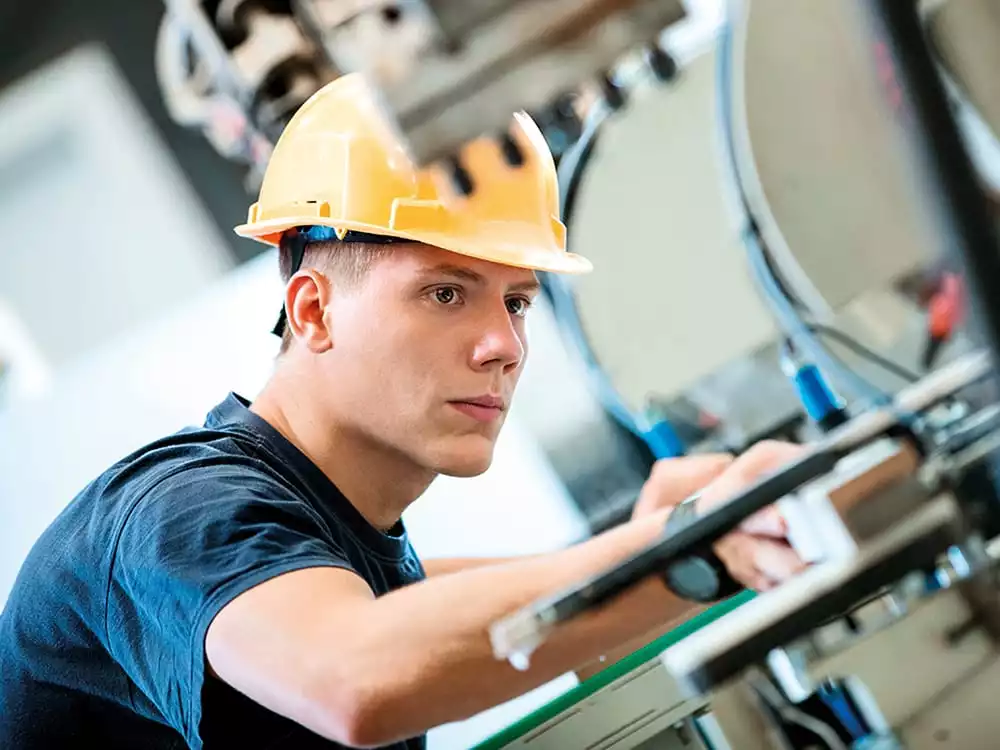
We at Rotpunkt Küchen are constantly looking at how well-known processes and structures can be optimised, how we can reduce the proportion of fresh wood used in chipboard, use production waste and offer employees a healthy working environment.
We are looking (even) more closely today than we did a few years ago. Considering how we can improve material efficiency. Thinking about how we can support our production and administration teams to work more healthily.
together to zero
Since 2017, we have been working continuously to rethink processes and challenge the status quo. Decisions are no longer driven solely by economic considerations, but increasingly by environmental and social factors. Our aim is to reduce our carbon footprint and conserve resources – and we know we still have a long way to go.
UN 17 -
sustainability goals
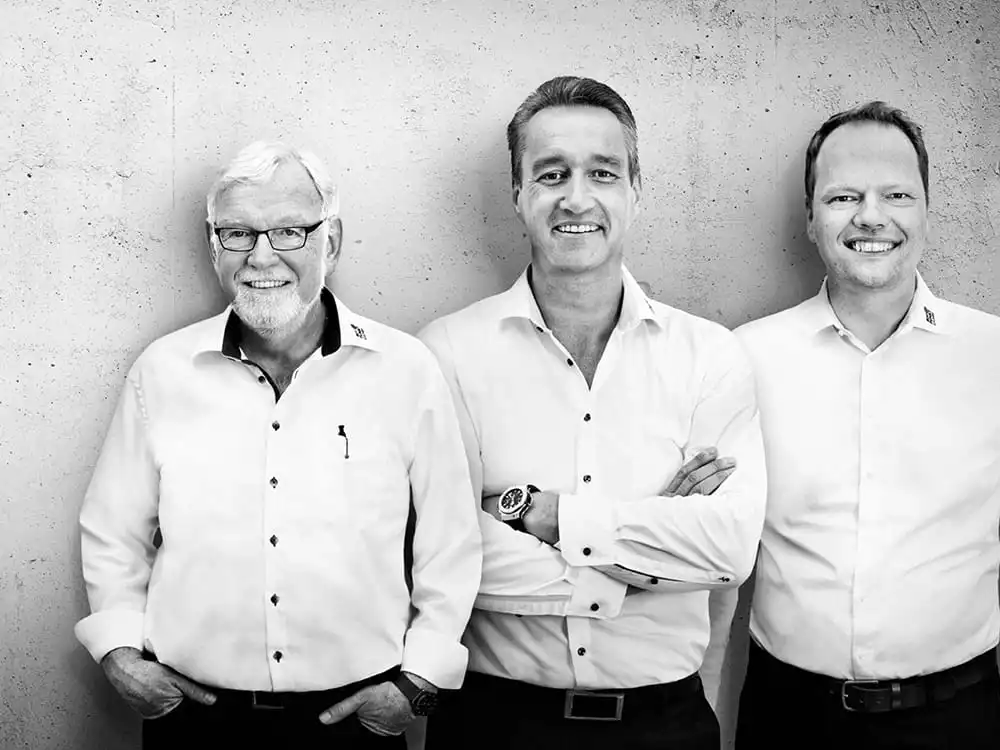
Heinz-Jürgen Meyer, Andreas Wagner and Sven Herden
Since 2017, we have been working continuously to find answers to these – and many other questions revolving around the topic of sustainability. Our actions are based on the 17 global goals of the UN for sustainable development of the Agenda 2030, the so-called Sustainable Development Goals.

In the following section, we will show you what we have already changed so far to improve the global climate and your home – and what goals we have set ourselves for the future. Join us as we work toward these goals. together to zero.
Our focus
- 1 No poverty
- 3 Good health and well-being
- 4 Quality education
- 5 Gender equality
- 7 Affordable and clean energy
- 8 Decent work and economic growth
- 9 Industry, innovation and infrastructure
- 12 Responsible consumption and production
- 13 Climate action
- 15 Life on land
UN
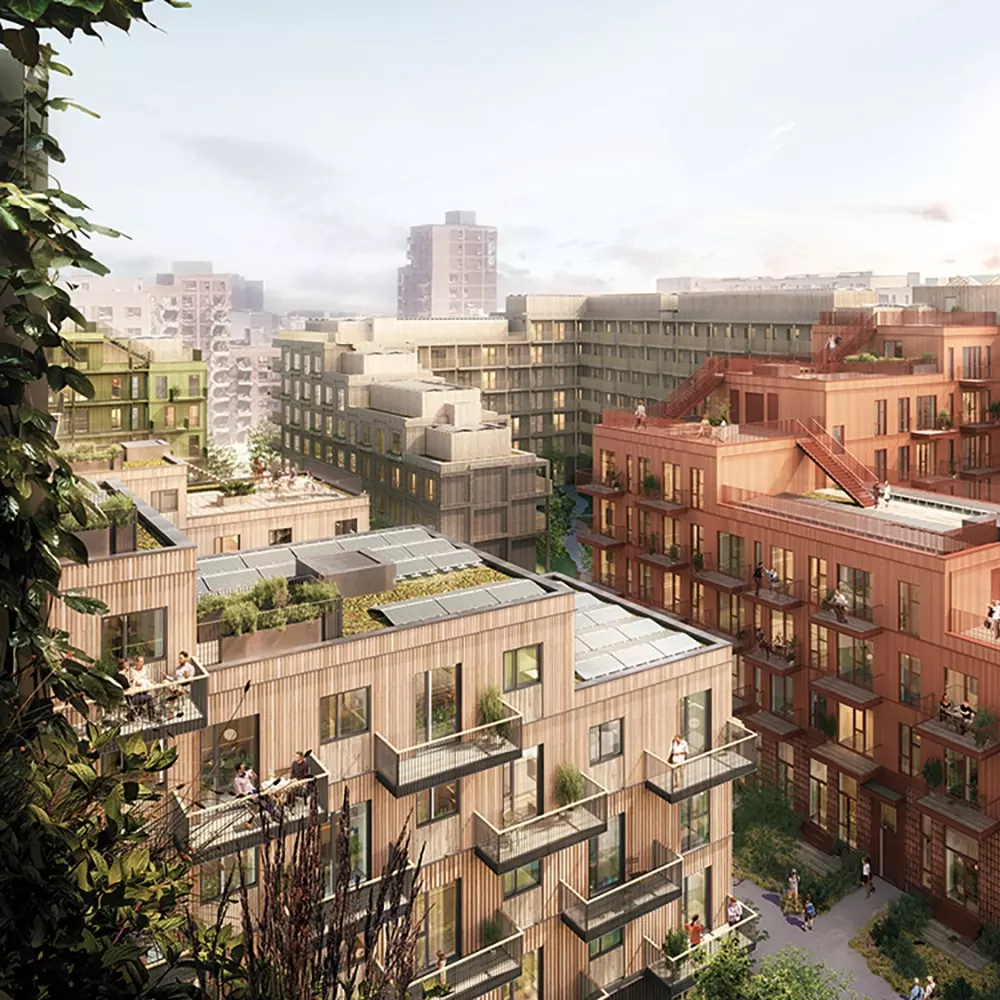

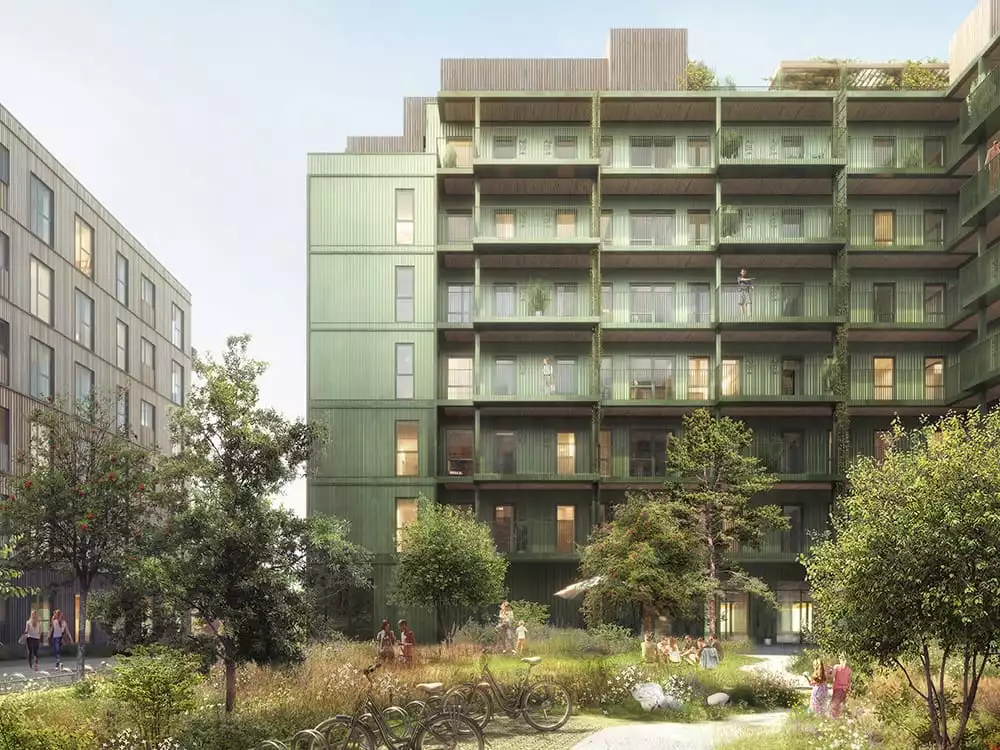
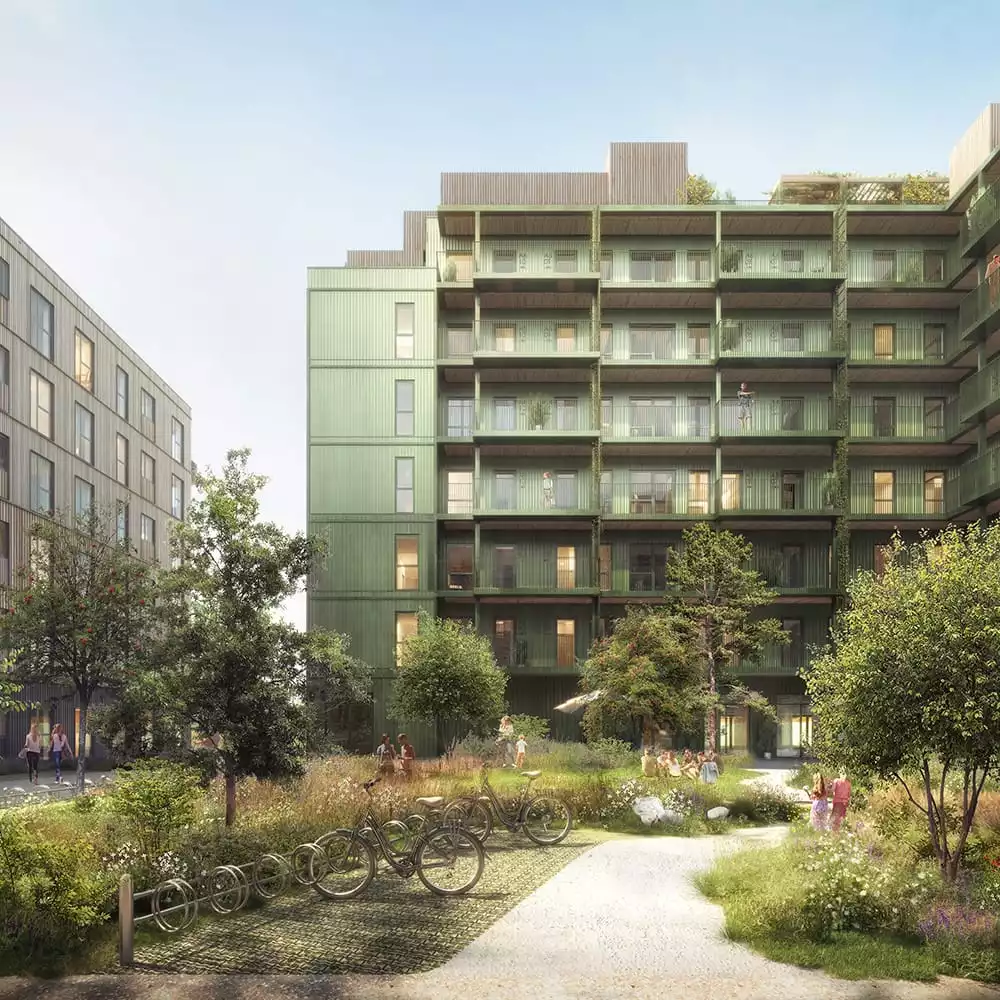
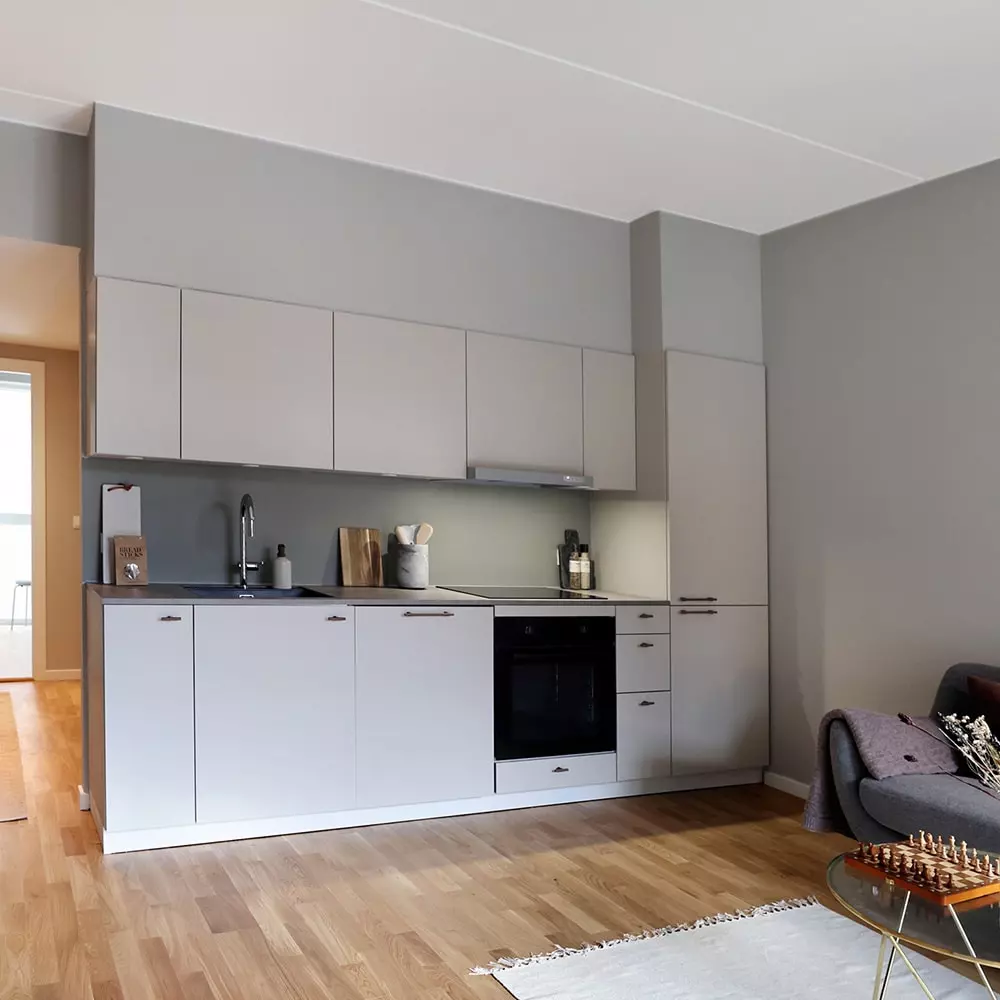
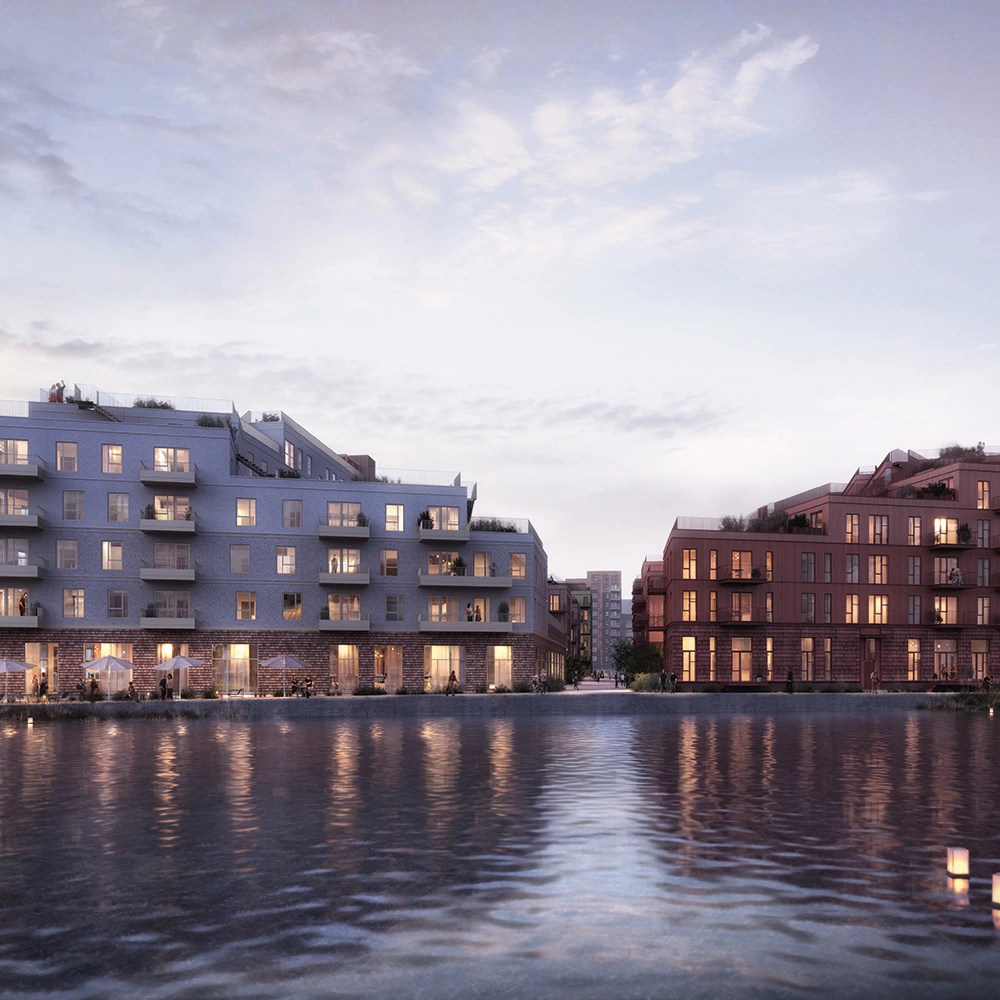
The UN 17 Village is under construction in Copenhagen, the capital of Denmark – a development focused on implementing the 17 Sustainable Development Goals of the UN. What does one of the world’s most ambitious construction projects have to do with Rotpunkt kitchens?
Quite a bit. After all, each of the 536 flats will be fitted with our kitchen and bathroom furniture, which is made from up to 90 per cent recycled wood and is FSC-certified (FSC® C131864 · www.fsc.org). Following a months-long application and assessment process, we were finally awarded the contract and are proud to be part of this project, which is aligned with the 17 UN Sustainable Development Goals (SDGs) and through which the investor NREP and the architectural firms Lendager and Sweco Architects aim to set new standards for the construction of the future. Our participation was made possible partially by the greenline BioBoard Gen2 – our chipboard made of up to 90 percent recycled wood.
UN17 Village
When we at Rotpunkt Küchen think about the climate, our first thought is you, our customers. Why, you may be asking? It is quite simple: every piece of furniture has an influence on the indoor air climate in your home due to the materials used. To reduce formaldehyde emissions, our products are certified in accordance with JIS F**** (F4Star). This is the emission class of the Japan Industrial Standard (as an equivalent to the DIN standard), which sets the highest requirements for formaldehyde emissions in the world.
In practical terms, this means that products that are F4Star certified, such as our Greenline BioBoard Gen2 chipboard, release around 50 percent less formaldehyde into the room air than conventional products. This is not just pleasant for us - it is of particular importance to your health.
Whilst conventionally manufactured chipboard consists mainly of virgin timber, up to 90 per cent of the greenline BioBoard Gen2 is made from recycled wood. Why is this an advantage? By using our greenline chipboard, we reduce the annual demand for virgin timber by an amount equivalent to a forest area of approximately 50 football pitches.
On the way to more sustainability, less CO2 emissions and improved climate protection, we have already taken a good look at our production and our products. But without the commitment, ideas and will of our employees, it would not be possible to pursue the goals we have set. Each and every one of them makes a valuable contribution towards achieving the goals every day – for example, by using a bike to get to work. After all, what is the path to greater climate protection? – we are all in it together.
You have probably come across the abbreviation FSC® before. It stands for "Forest Stewardship Council®" – an international organisation that promotes the conservation and responsible management of forests worldwide. Already, 95 % of the Rotpunkt kitchen product range is FSC®-certified (FSC® C131864 · www.fsc.org). This means not only that we use wood from forests in Germany, Austria and France for our products – but also that attention is paid to sustainable forestry, respec for human rights and fair working conditions. In this way we are assuming responsibility not only for our environment, but also for our social coexistence.
Since 2019, we at Rotpunkt Küchen have been a partner of myclimate. Together with myclimate, we also support climate protection projects around the world. These projects do not offset our own emissions, but represent an additional contribution to global climate protection.
A practical example:
Through a joint climate protection project (Project ID 7138 | Reducing rainforest deforestation thanks to efficient stoves in Kakamega, Kenya), myclimate and Rotpunkt Küchen are helping hundreds of families in Kenya to lead a more carefree life by providing them with efficient stoves. Currently, 849 Kenyans are already benefiting from better indoor air quality and more free time, as they spend less time collecting firewood. Furthermore, these activities have helped to preserve a forest area of 5.25 ha (equivalent to the size of 7 football pitches) as a natural CO₂ sink. The project adheres to the highest offset standards and is certified to the Gold Standard (GS VER).
Click here to find out more about the project. .
Energy management
Comprehensive measures and investments in the area of energy optimisation. Annual report on this in the management review; ISO 50001 audit.
Green Electricity Label
Promotion of regional/sustainable electricity generation through additional payments and contributions. The ‘Münster: natürlich’ electricity tariff is used, as evidenced by a certificate.
Procurement Policy
Requirements for procured goods and services.
A proactive approach is to be adopted to bring about changes in the goods procured. We are continuously working on kitchens manufactured from materials with a high proportion of recycled content and a reduced carbon footprint.
FSC® (FSC® C131864 · www.fsc.org) + other audits
Everything relating to sustainability, the development of processes and structures, and the optimisation of workflows.
This applies both internally and throughout the entire supply chain.